
From Ember
Potty training UK when to start and what to do when it wobbles
Last checked: 9 August 2026
All guides/Potty training UK when to start and what to do when it wobbles
A hard age is the wrong starting point. Start with ERIC’s picture: help them learn wee and poo as ordinary body jobs, then stop nappies when you can give it a fair go. If it wobbles, that is still the same story.
If you’re new here: Ember is a UK parenting app for babies and toddlers. We write guides like this so you get a clear answer and can get on with your day. When you want practical ideas matched to your child’s age, the free Ember catalogue is there to browse. This page is just about potty training in the UK, including when it wobbles.
When should we start potty training in the UK?
According to ERIC, you do not need to wait for a full set of “readiness signs” before you begin helping. Think of it as potty learning: preparation, practice, then stopping nappies when you can stay close and keep the week fairly steady. ERIC says most children are ready to master more of the job from around 18 months, and that stopping nappies between 18 and 30 months is better for bladder and bowel health.
Ember’s note: that window is a guide, not a race at 18 months. Plenty of families are still mid-journey around 22 to 24 months, which is where Ember keeps the practical ideas. A later start than the toddler at nursery is not a fail. NHS Healthier Together follows the same ERIC picture: sit them on the potty early, change wet nappies promptly, and sort constipation before you stop nappies.
What does ERIC actually want you to do?
ERIC’s three-step approach is preparation, practice, then stopping nappies. You can start the early bits from when they can sit with help. Stopping nappies is a later change, and it goes better if wee and poo already feel ordinary.
- Preparation: change wet or soiled nappies promptly, talk about wee and poo in ordinary words, and check they pass soft poo most days.
- Practice: offer short potty sits after waking and after meals, still in a nappy if you like, plus a little nappy-off time after they have already done a wee or poo.
- Stopping nappies: pick a stretch without a house move, new baby, or room change at nursery. Tell them clearly that wee and poo now go in the potty.
- Clothes they can push down themselves help more than a fancy seat. A low potty, or a child toilet seat plus a step so feet are planted, is enough.
- If they are unwell or simply will not sit, ERIC says pause what feels too much. Keep the potty out, keep naming wee and poo at nappy changes, and pick it up again when the week is kinder.
What helps vs what is not a race
Look for body clues and a week you can actually support. Do not treat 18 months, or a nursery start date, as a hard rule.
| Often helpful | Easy to over-read |
|---|---|
| They stay dry a little longer, or you notice fidgeting, going quiet, hiding, or straining for a poo | A birthday, or another child at nursery already in pants |
| They can sit, walk to the bathroom with you, and push trousers down with help | Waiting until they announce they are “ready” in full sentences |
| Soft daily poo, and enough water-based drinks | Starting the no-nappy week while they are poorly or constipated |
| A picture book that names wee, poo and the potty | A three-day crash method that treats accidents as failure |
What if it wobbles after illness, a new sibling, or nursery?
According to ERIC, it is common for a child who was doing well to have more accidents when routine changes, including starting nursery. Things often settle as the new place becomes familiar. Ember’s note: the same kind wobble shows up after a bug, a hospital stay, or a new baby. That is not them going backwards on purpose.
If the no-nappy week has fallen apart, pause that push kindly. Go back to practice sits and naming, keep the potty where they can see it, and try stopping nappies again when everyone has had a quieter stretch. ERIC says you do not have to abandon potty practice; you can simply do less until they feel better.
If accidents keep going, or poo is hard, painful, or rare, ERIC says check for constipation first, and talk to your health visitor or GP. Underlying constipation, a urine infection, or another health issue can sit underneath a “regression.” Night wetting is a separate job and often lasts longer than daytime pants. It is not their fault.
Do potty books actually train them?
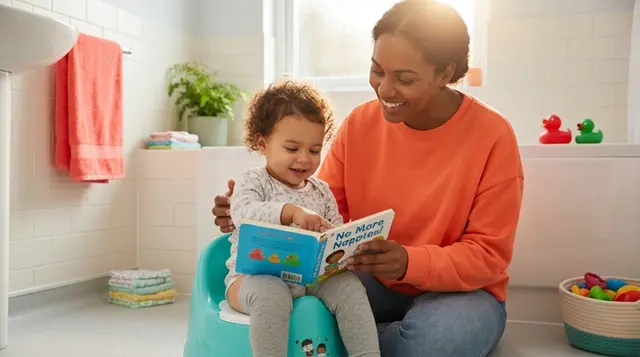
No. ERIC uses books, pictures and a favourite doll on the potty to show what wee and poo are for, and to make the bathroom feel ordinary. That is naming and practice, not a training programme.
A short picture book at nappy-change time or on the potty is doing its job if they point, copy a word, or sit a bit longer. If family want to buy something, one simple book and a plain potty beat a boxed set that promises pants by Friday. Ember’s catalogue ideas around 22 to 24 months sit in that same spirit: help them name the job, then live it at their pace.
What about nights, outings, and nursery?
Daytime pants and night dryness are not the same skill. ERIC says some children follow on quickly after daytime success; others wet at night for years. Outings and nursery need the same words and the same plan, or the learning unravels.
- Once days are mostly dry, try naps without a nappy if the nappy is often dry on waking. Accidents are common at first. A waterproof sheet helps.
- For nights, ERIC suggests a potty sit at bedtime, drinks earlier in the evening, and no “lifting” them half-asleep for a dream wee if you want them to learn to wake.
- For outings, ERIC says avoid putting a nappy back on “just for the shop” once you have stopped. Take the travel potty and spare clothes instead.
- Tell nursery the words you use for wee and poo, and agree dates before you stop nappies. Avoid starting pants in the same week they change rooms.
A short list you can screenshot
Enough for this month without turning it into a test.
- Potty learning first: name wee and poo, sit after waking and meals
- Soft poo most days before you stop nappies; ask HV or GP if unsure
- 18 to 30 months is ERIC’s usual window, not a birthday deadline
- Pick a steady week to stop nappies, not a new sibling or nursery room change
- If it wobbles after illness or nursery, pause kindly and keep the potty out
- Books for naming, not a three-day programme
- Same words at home and nursery; easy trousers they can push down
- Nights can wait; daytime pants already count
A few quick answers
When should I start potty training in the UK?
According to ERIC, start potty learning early with sits and naming, then stop nappies when you can support a fairly steady week. Most children take more of the lead from around 18 months. Ember’s note: that is not a race, and many families are still in the middle around 22 to 24 months.
Should I wait for readiness signs?
ERIC says no. Many children never announce they are ready, especially if they have additional needs. Teach the skills, then stop nappies when you can stay close. Waiting for a perfect speech announcement often just delays practice.
What is potty training regression?
ERIC describes it as more accidents after a child was already doing well, often when routine changes, including nursery. Illness and a new sibling do the same job. Pause the no-nappy push kindly, keep practice going, and see your health visitor or GP if constipation or pain is in the mix.
Is the three-day potty training method a good idea?
ERIC asks for a gradual process rather than a short crash week. Accidents are part of learning. A long weekend at home can help when you stop nappies, but only if preparation and practice already happened.
When should we drop the night nappy?
ERIC says night dryness varies hugely and is not your child’s fault. Work on daytime first, then naps, then nights. If they are still wetting at night after five, ERIC has separate night-wetting advice, and your GP can help.
That is the UK potty picture in plain English. When you want more practical ideas for toddlers around this age, browse the free Ember catalogue.
Browse the free catalogue · ideas for toddlers around 22 to 24 months →
Sources
- ERIC: Potty training: how to start — Gradual potty learning; do not wait for readiness signs; 18–30 month nappy window; preparation, practice, stopping nappies; pause when unwell
- ERIC: Potty training problems (including regression) — Regression after routine change; constipation before retrying; talk to HV or GP if it does not settle
- ERIC: Potty training at nursery and school — Accidents after starting nursery; consistent words and plans between home and setting
- NHS Healthier Together: Toilet training — NHS-facing same ERIC picture: early sits, nappy-free practice, constipation check, 18–30 months
We link to official sources below. Check the live pages for the latest guidance.