
From Ember
Button batteries UK room-by-room sweep
Last checked: 9 August 2026
All guides/Button batteries UK room-by-room sweep
Toddlers around 13 to 15 months are strong enough to pull a remote off the sofa and still mouth whatever they find. The same risk starts earlier, as soon as they put things in their mouths. This page is a sweep you can do today, then the emergency steps if you ever need them.
If you’re new here: Ember is a UK parenting app for babies and toddlers. We write guides like this so you get a clear answer and can get on with your day. When you want practical ideas matched to your child’s age, the free Ember catalogue is there to browse. This page is just about button batteries at home.
Why does this check matter from mouthing through toddler reach?
According to CAPT, lithium coin cells about the size of a 5p are big enough to stick in the food pipe and strong enough to burn. Smaller button batteries can still harm, including if they go in an ear or nose. GOV.UK says they react with saliva and can burn quickly. Children who mouth, crawl, cruise and climb are all in the window.
Ember’s catalogue ideas for this sit around 13 to 15 months because that is when many toddlers can reach the coffee table and still taste-test what they find. Do the same sweep earlier, as soon as anything goes in the mouth, and later when they can open drawers. Used “flat” batteries still hold enough charge to hurt. Store them high and recycle them promptly.
What should I do if I think they swallowed one?
According to CAPT, GOV.UK and Alder Hey NHS: treat it as an emergency. Do not wait to see if they seem fine.
- Go straight to A&E or call 999. Tell staff you think it is a button battery.
- Take the gadget or the battery pack with you if you can find it quickly. Do not delay leaving to hunt the house.
- Do not let them eat or drink. Do not try to make them sick.
- Symptoms can be vague or come and go: drooling, gagging, pointing at the throat or tummy, going off food, seeming more tired or “not themselves.” Vomiting bright red blood needs immediate help.
- UK advice on honey is mixed. CAPT says getting to hospital is the first job unless A&E is a long way away, and honey must not be given under one. Do not spend time looking for honey if that slows you down.
Room-by-room sweep
Walk the house once with a screwdriver and a high box or cupboard. CAPT and GOV.UK both say: know what uses a button battery, and keep unsecured gadgets out of reach.
| Room or bag | Look here first |
|---|---|
| Lounge | TV remotes, soundbar remotes, musical greetings cards, tea lights, small torches, key finders |
| Kitchen | Digital scales, kitchen timers, thermometers, some bottle lights or novelty gadgets |
| Bathroom | Forehead or ear thermometers, bathroom scales, some electric toothbrushes or night lights |
| Toys and siblings’ rooms | Light-up toys, remote-control cars, talking books, older-child gadgets, slim remotes with a slide-off back |
| Hall, car, changing bag | Car key fobs, bike lights, travel thermometers, spare batteries loose in a pocket or pouch |
What does a “secure compartment” actually look like?
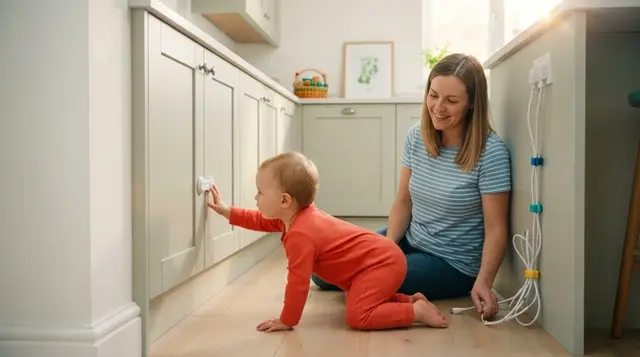
GOV.UK notes that toy battery compartments should be secured. Plenty of remotes, cards and cheap gadgets are not. If the back slides off in your hand, treat it as unsecured.
- A screw you need a tool for is the usual secure close. Check the screw is still there after every battery change.
- If the back is loose, tape is a weak fix. Put that gadget high until you replace it or retire it.
- Beware bargain toys and marketplace gadgets. CAPT flags that some arrive with batteries a child can reach easily.
- Spare packs on the sideboard are as risky as the gadget. Open multi-packs over a table, not the floor.
- Tell older children these batteries are not for play, and not for sharing with a baby brother or sister.
What about used batteries, grandparents’ houses, and the changing bag?
CAPT and GOV.UK both say a used battery can still burn. Recycle it promptly. The same sweep belongs anywhere they spend time: grandparents, childminder, the car door pocket, the changing bag you have not emptied since last winter.
A changing bag often hides a thermometer, a musical toy, or a spare coin cell from a cancelled order. Tip it out once. Keep spares in a high kitchen cupboard, not the nappy caddy. If family buy light-up cards or tiny remotes, ask them to check the back before those things live on the floor.
You can keep exploring the house. The job is to make coin-cell things harder to reach, not to stop them opening the safe cupboard of wooden spoons.
A short list you can screenshot
One Saturday sweep, then a quick look after any new gadget arrives.
- Lounge remotes and cards: screw shut or up high
- Kitchen scales and timers checked
- Bathroom thermometer out of reach
- Toys and older-sibling gadgets: compartment actually secured
- Car fob, bike lights, changing bag, grandparents’ coffee table
- Spare and used batteries stored high, then recycled
- If you even wonder they swallowed one: A&E or 999, no food, no drink, no making them sick
A few quick answers
What should I do if my child swallows a button battery?
Go to A&E or call 999 straight away. Tell them it may be a button battery. Take the gadget or pack if it is to hand. Do not give food or drink and do not make them sick. Do not wait for symptoms. That is CAPT, GOV.UK and Alder Hey NHS advice.
Should I give honey?
UK sources do not all say the same thing. Alder Hey mentions honey over 12 months on the way to hospital. CAPT says getting to A&E is the priority, honey is not for under-ones, and hunting for it can waste time. Ember’s line: leave now; do not delay for honey.
Are “dead” button batteries still dangerous?
Yes. CAPT and GOV.UK say used batteries can still hold enough charge to hurt. Store them out of reach and recycle them as soon as you can.
When does this risk start?
As soon as they mouth objects, and it continues through toddler reach and climbing. Ember’s 13 to 15 month ideas are a good prompt to sweep the house, not the first week it matters.
Which batteries are the most serious?
CAPT says larger lithium coin cells, about the size of a 5p, are the ones most likely to stick and burn. Smaller button batteries can still harm, including in an ear or nose. Treat any suspected swallow as urgent.
That is the button-battery sweep in plain English. When you want more practical ideas for toddlers around this age, browse the free Ember catalogue.
Browse the free catalogue · ideas for toddlers around 13 to 15 months →
Sources
- Child Accident Prevention Trust: Button battery safety — Hunt the home; store high; used batteries still unsafe; A&E if suspected swallow
- Child Accident Prevention Trust: Button batteries in an emergency — A&E or 999; no food or drink; no making them sick; vague symptoms; honey is not the first UK job
- GOV.UK: New button battery safety campaign — Secure compartments; remotes and key fobs; educate older children; recycle used cells; emergency steps
- Alder Hey NHS: What to do if your child swallows a button battery — NHS Trust emergency: A&E first; possible signs; call 111 if unsure they swallowed one
- Great Ormond Street Hospital: Button batteries, using them safely — Even used batteries can harm; A&E if suspected swallow; nose and ear insertion also urgent
We link to official sources below. Check the live pages for the latest guidance.